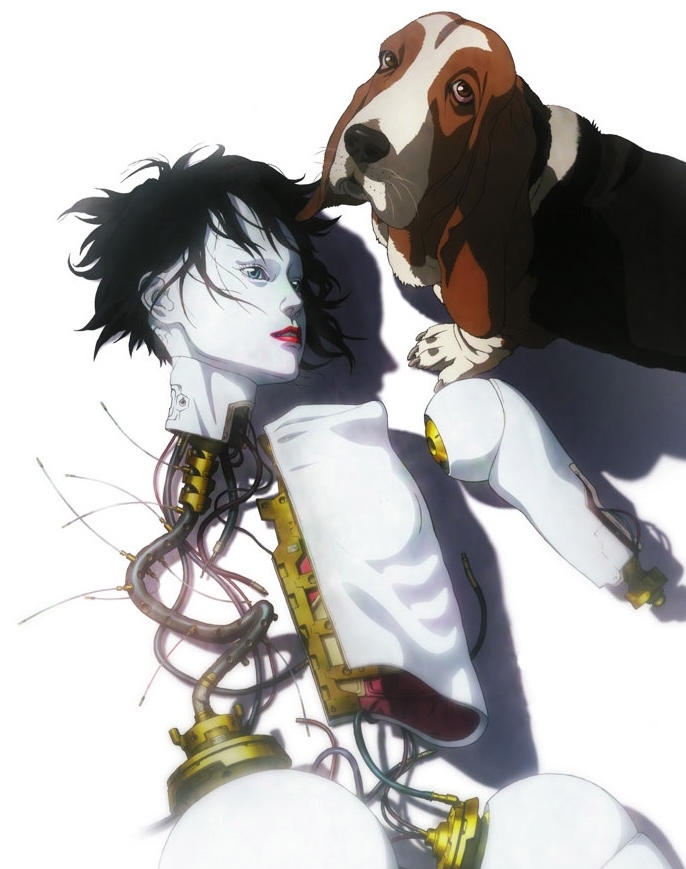
I am fascinated by the question of how subjects become queer through self-fragmentation in total solitude—without access to the communal forms of queerness that often define the field’s dominant imaginaries. For many Global South queer subjects, Asian diasporic subjects, and neuroqueer subjects, this solitude is not a deviation from queerness but its very point of emergence. My research traces how isolation, melancholia, and bodily disintegration can become the conditions of possibility for queer and trans becoming, rather than symptoms of loss. Across literary and cinematic texts, I ask what forms of survival, futurity, and new relationality arise when the subject has nowhere to turn but must turn inward—when the only available site of queerness is the self in its most fractured state.
Queer Solitude: A Queer Utopia for One
In this paper, I offer a global south queer of color intervention in the debate on queer utopia and the anti-social thesis (Edelman 2004, Muñoz 2009). By looking at texts from Ocean Vuong’s poem “Someday I’ll Love Ocean Vuong” (2016) and his book On Earth We’re Briefly Gorgeous (2019), I develop an alternative account of queer utopia, which I term “queer solitude”. I argue that asian queer subjects from the global south often occupy a “now” that is radically different from the global north queer subjects. When queerness is forbidden in the communal form as Muñoz envisions, one retreats into their own queer body as their last and only site of queerness. My account thus diverges from both Edelman’s anti-sociality and Muñoz’s communal sociality: Even if the future does not exist, I still want my queer utopia to happen right here and now, even if my body is the only altar for this singular utopia, even if I were the only pair of eyes to witness its “incandescent illumination”. Such queer utopia is as singular, fleeting, and ephemeral as each of our short-lived queer existence on earth is, leaving little trace behind and embracing no future.
The Fragmented Self: Trans Melancholia in M. Butterfly
In The Melancholia of Race (2021), Anne Anlin Cheng analyzes David Hwang’s M. Butterfly (1988) through her framework of “racial melancholia”, where the white and asian subjects are both formed through the melancholic introjection of the “submissive Oriental woman” and the “cruel white man”. While both Hwang’s original play and Cheng’s analysis focus on how our subjectivity is eternally trapped in the binary structure of the colonizers and the colonized others, I argue that David Cronenberg’s film adaptation of M. Butterfly (1993) opens space for a trans reading that destabilizes this binary. Building on Cameron Awkward-Rich’s notion of trans haunting and Vivian Huang’s analysis of Asian transfeminine self-cutting in Surface Relations (2022), I give an account of what I call “trans melancholia”, where the melancholic subject, like all haunted houses, is where the living and the ghosts gradually transform into one another. Under this framework, I read Gallimard’s final trans-formation as a fleeting moment that ruptures the binary structure. Cutting open the body, both metaphorically and literally, transforms the body into a haunted house to invite femininity, non-normative gender, and other ghosts to emerge to the body’s surface.
The Fragmented World: Cinema as Melancholia in Goodbye, Dragon Inn
Tsai Ming-liang’s cinema has long been associated with disappearance: the loss of a father, the disappearance of a loved one, the death of cinema itself. My paper theorizes such disappearance through Freud’s theory of melancholia and Metz’s Imaginary Signifier. Through analysis of Goodbye, Dragon Inn (2003), I propose that Tsai’s cinema moves beyond Bazin’s mummifying complex and instead inscribes on film the lost objects in their most ruinous state. Loss is not an endpoint but a condition of possibility for Tsai’s cinema, the beginning of a ghostly life in which what disappears becomes all the more intimate through cinematic inscription. Rather than queer repression, his melancholic suspension of queer desire reveals how it is only through the disappearance of the lost object that we can truly, intimately, and exclusively possess it, once and for all. Following Heather Love’s Feeling Backward, I end on a queer note on what it means to love disappearance and its ruin. Tsai does not imagine the past as a lost paradise superior to the present; rather, the past matters because the past is us; we carry it as fragments lodged within ourselves. If the past is cluttered with longing, pain, and missed connections, then so are we. Its ruin is simply the shape of our fragmented self.
Categories: Psychoanalysis, Post-Structuralism, Queer of Color Critique